

UX
Project Details
Summary
The third school project were aimed towards users with a big interest in retro movies. Our team started with an experiment canvas where we brainstormed different target audiences that we assumed had a problem. Retro movies are usually hard to find, and websites have licenses for only a handful of movies.
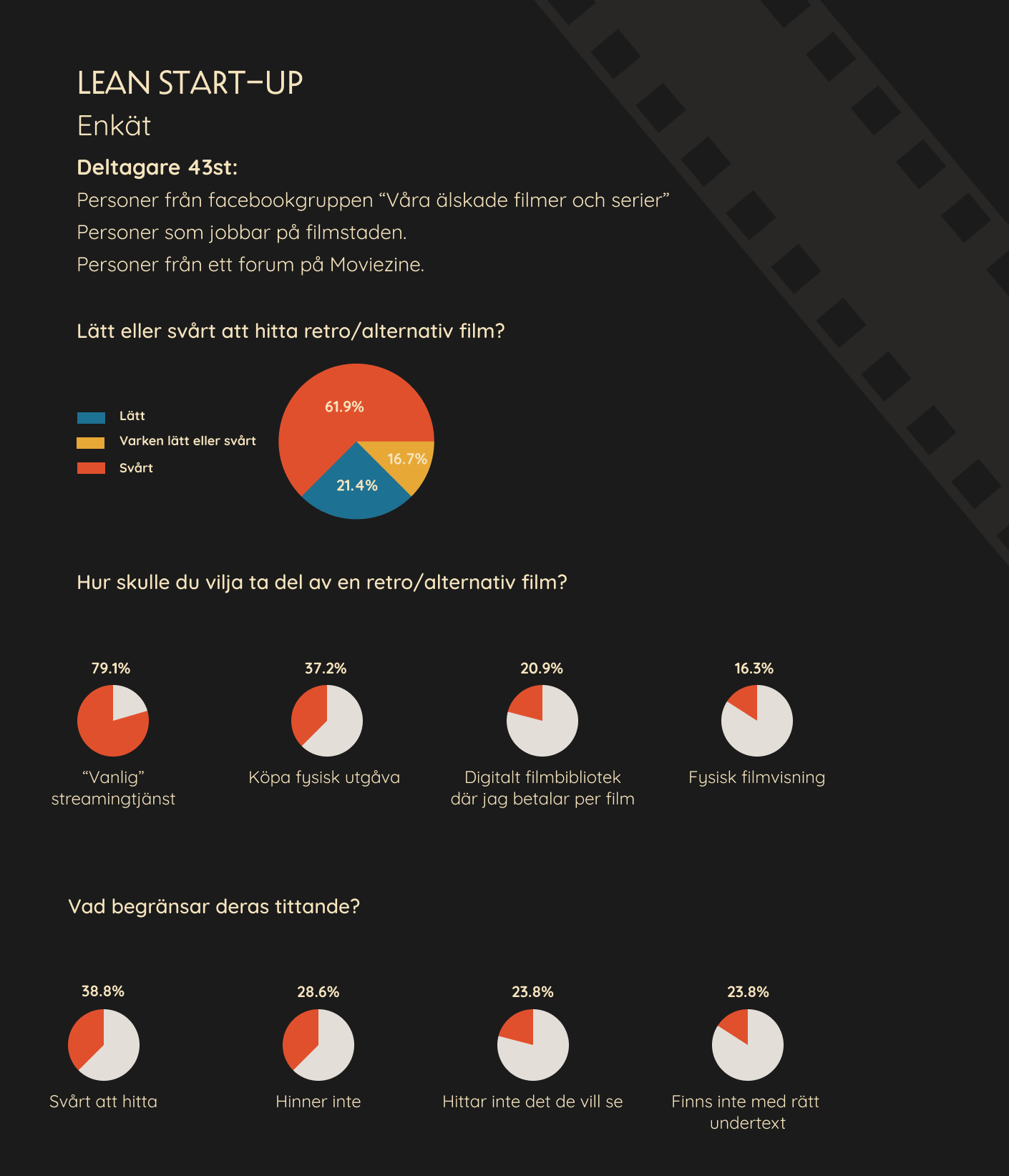
We began our lean start-up by gathering insights from our audience, both questionaries and interviews. Results showed that 62% find it difficult searching for retro movies on the web, and if they find one, it's usually not in their preferred language or with subtitles.
Our proposed solution was developing a streaming site for film enthusiasts, now some users prefer having a physical edition of the movie, either for collection or rewatching. Our recommendation would be to open up a web store for buyers.
Role
Tools
Timeline
Intro
Ordinary streaming services do not have the selection of retro and alternative film that film lovers demand. They want the opportunity to look at such alternatives, but it is difficult to find.
Streaming services are bigger than ever, and film consumption is more diverse than ever. With people stuck at home, streaming has had a surge of growth in viewership. Our service concentrates on retro and alternative film, something that is not currently covered on the market.
We want to deliver quality film to enthusiasts, making retro and alternative film more available for a wider audience.
The Team
The team consisted of five UX-students working together with three java developer students. The UX-team shared roles for the research, branding and prototyping work, while the java-team got a handoff every Monday with the prior week of finished design work.
During the sprints I directed the visual design, and interactions. We had meetings during the last hour every day to prepare for the next, and the chosen solution would go into hi-fi prototyping for the next day, while less prioritized functions would be looked into when time allowed.
We planned stand-ups each morning, making a daily plan for execution. Stand-up gave us time to reflect and present yesterdays work for the developers. Weekly sprints were finished with a retro, during the retro everyone got feedback on what went well and what could be better for next sprint.
The team shared roles in being the scrum master, product owner and designers.
Everyone had a different approach on how to work like a scrum master and product owner, giving the team valuable information and experience in the process making. It made adapting on each rotation easier, knowing what we could do better and what to avoid. Our team always ensured that every decision was focused on the users needs, with daily user tests and interviews.
The Challenge
Our challenge was to build a trustworthy streaming website, engaging the user to convert single purchases into a subscriptions.

Breaking Down The Process
Understanding The User
Retro movie lovers using streaming services became our chosen target group.
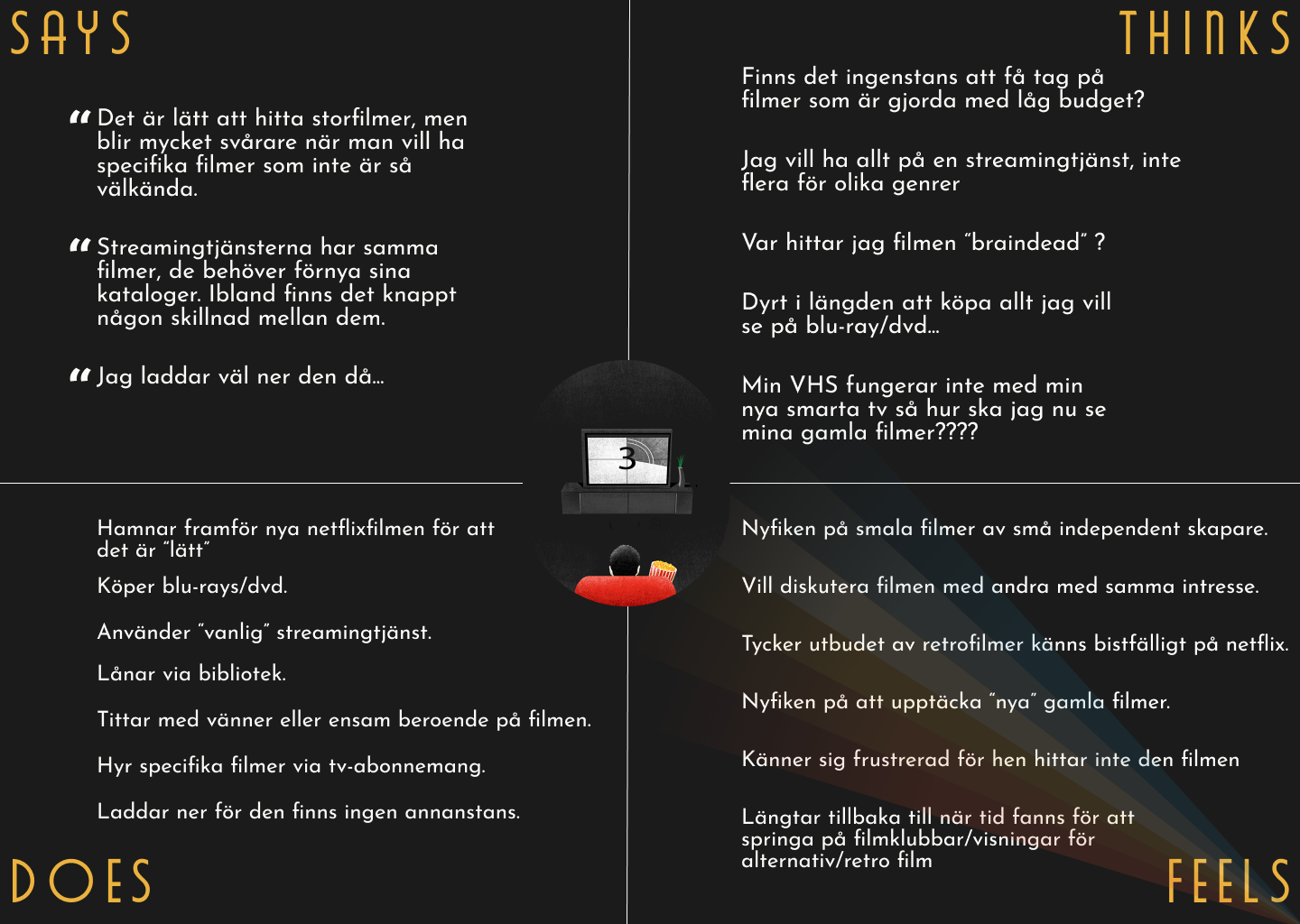
We assumed that users were saying:
" I can't find retro movies online "
" I can't find movies in my language or with subtitles "
" I want to rent a movie without a subscription "
Our risky assumptions about our target group resulted in:
• Difficult finding retro movies online.
• Preferred language and subtitles did not exist, other than English/Swedish.
• Have the option to rent a movie, without being forced to subscribe.
Our method of choice to validate our assumptions were to send out a survey first, reaching out on social media and streaming sites. Finally we would conduct interviews with users for a more open conversation, so we could get insights with deeper answers.
Synthesizing The Material
Problem Statements
Standard streaming services, does not have the range of retro and alternative film that the users demand. They want the opportunity to watch those movies, but they are hard to find.

Ideating Solutions
We used our OKR (Objective and Key Results) to start the ideation process
OBJECTIVE
• Being the best and most extensive streaming service for retro and alternative film.
• Streaming service showcasing films created by minority groups.
KEY RESULTS
• 5 million active members after 2 years.
• 8/10 recommends Cassette
• 25 % more streams per month than other retro film services.
Next we mapped out a empathy map, defining our users goals and pain points.
Goals
• Enjoy movies
• Find unique movie experiences
• Value from the service
• Legal alternatives
Pain points
• Lured into bad websites, malware.
• Time wasted finding the right movie with correct language and subtitles.
Key words from Lightning Demo: Stream/Buy/Rent buttons, offers, vending machines, and payment methods...


Validating Design Concepts

Low-Fi Prototypes

Testing Low-Fi Prototypes with users
During our sprints, Wednesday and Thursday were check-ins, we finalized sprint prototypes on Wednesday, and had user tests, then from the feedback provided we iterated on Thursdays for our final test of the week.
Hi-Fi Prototype Development
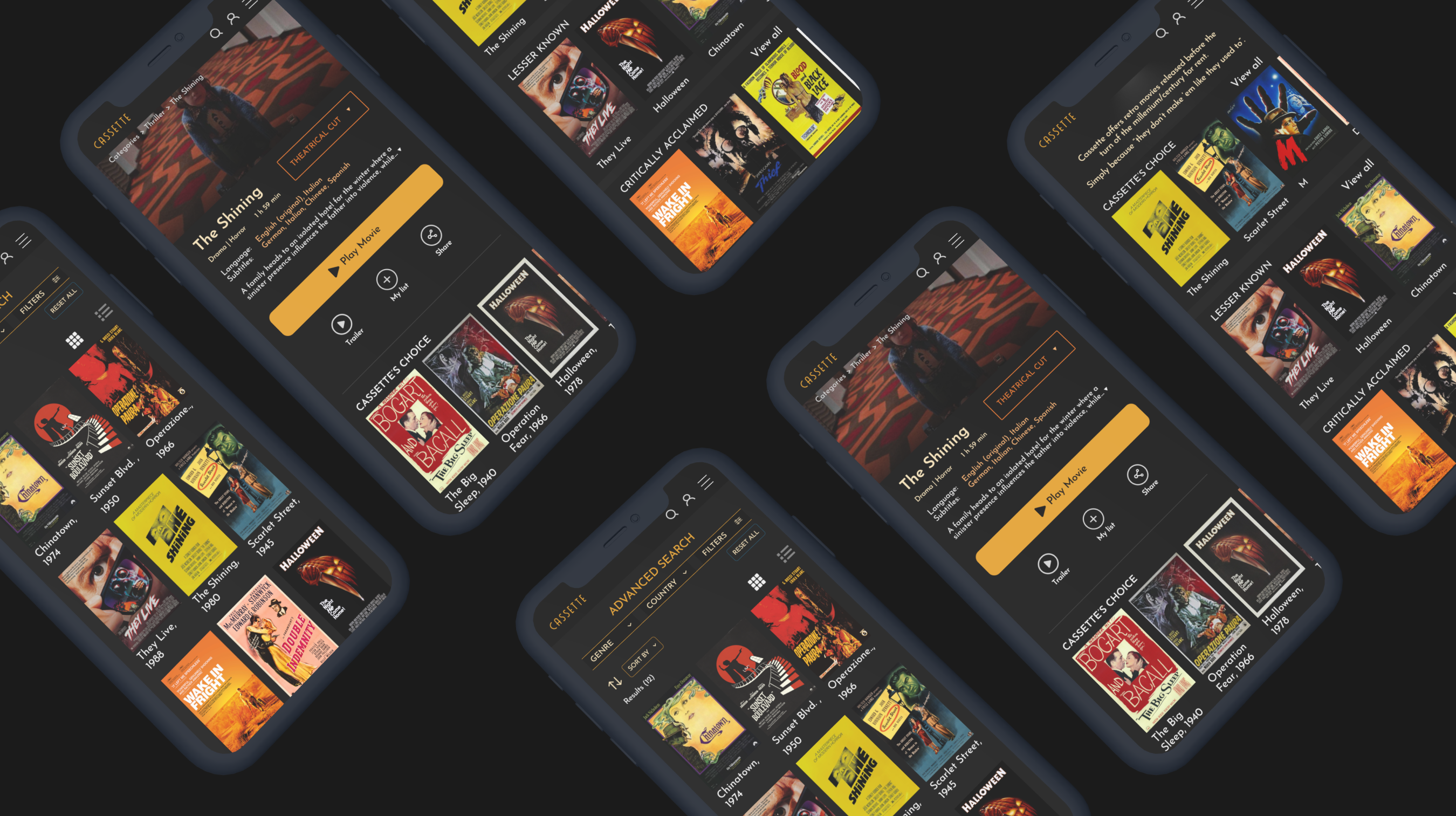
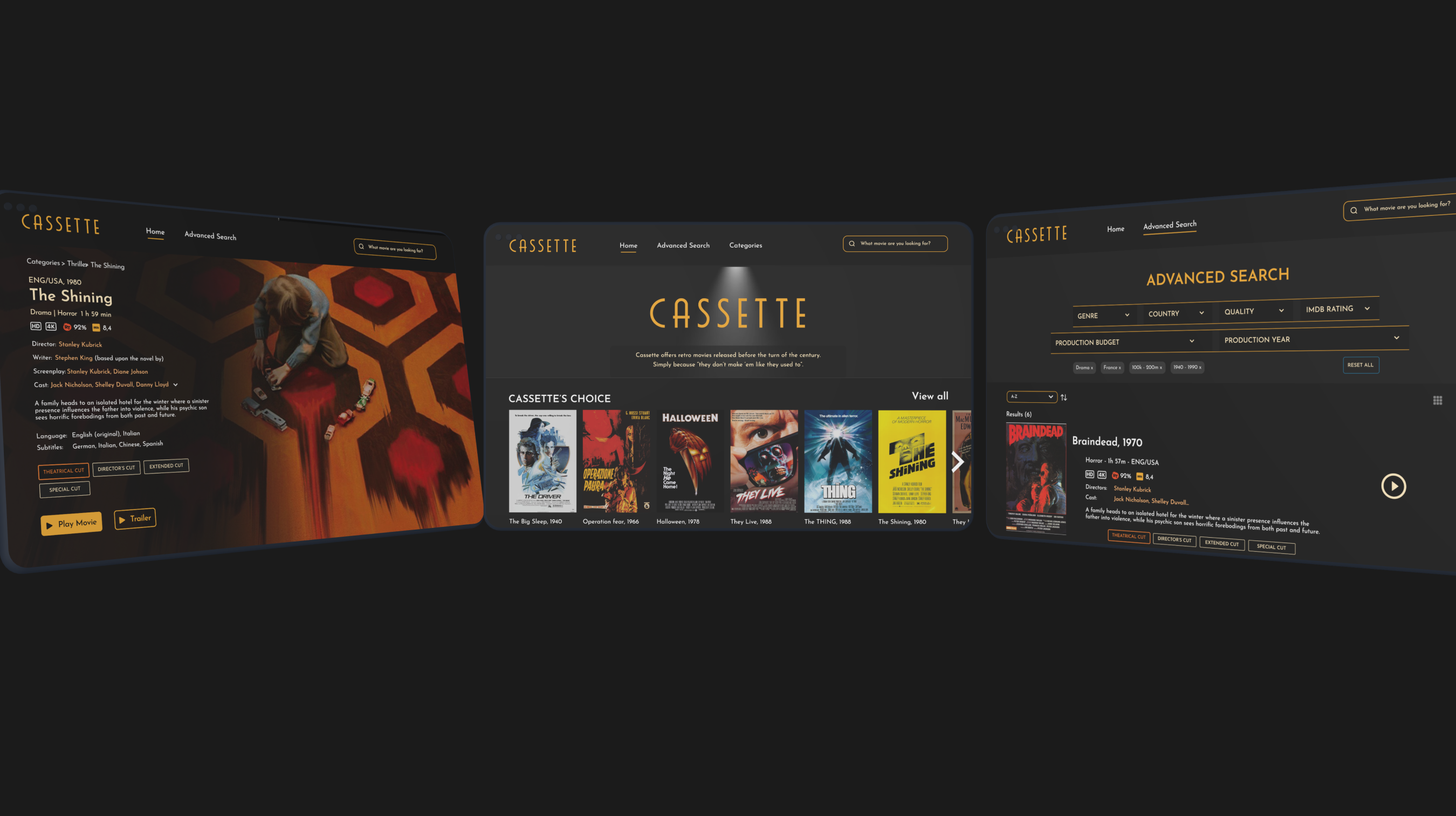
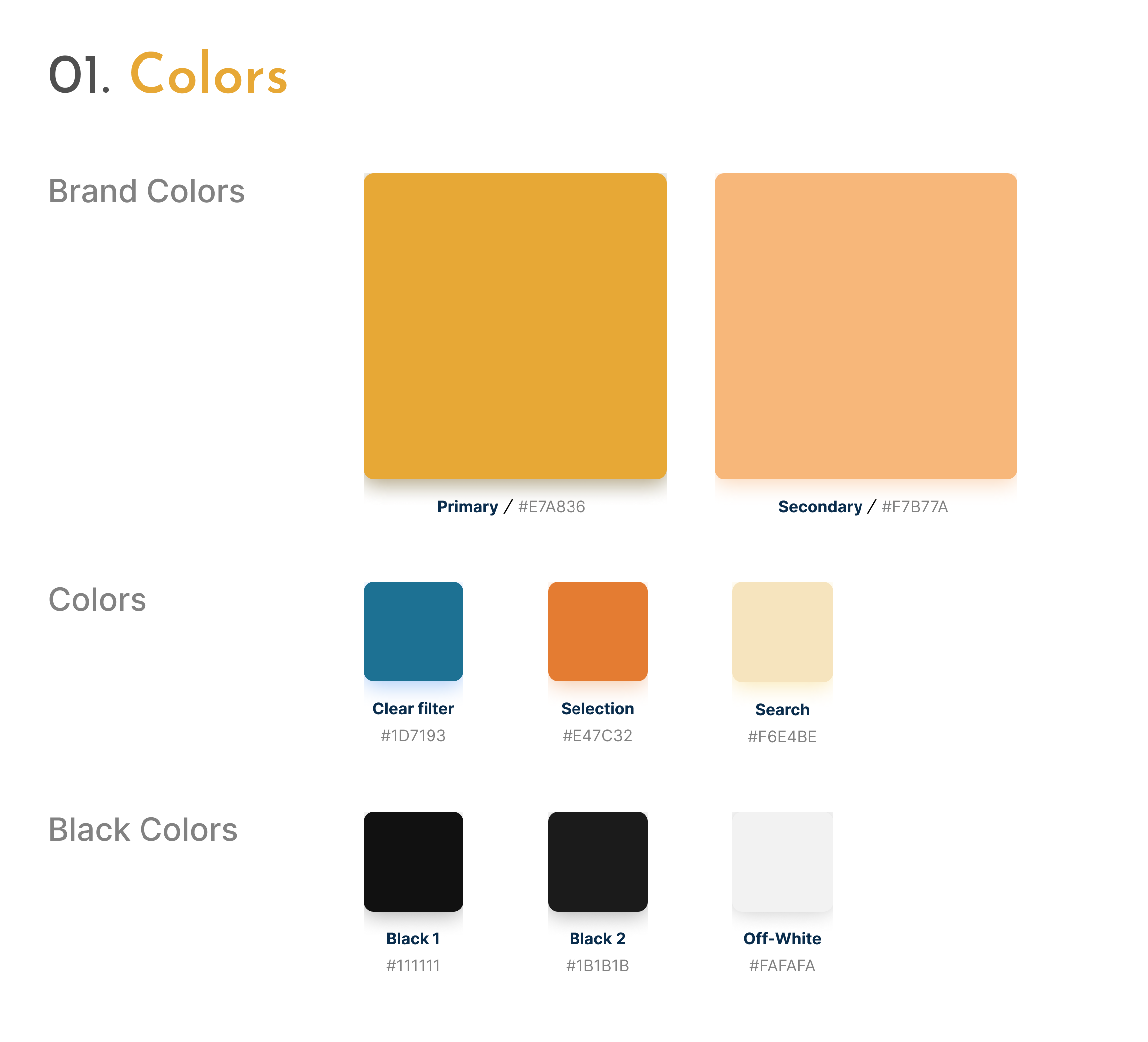
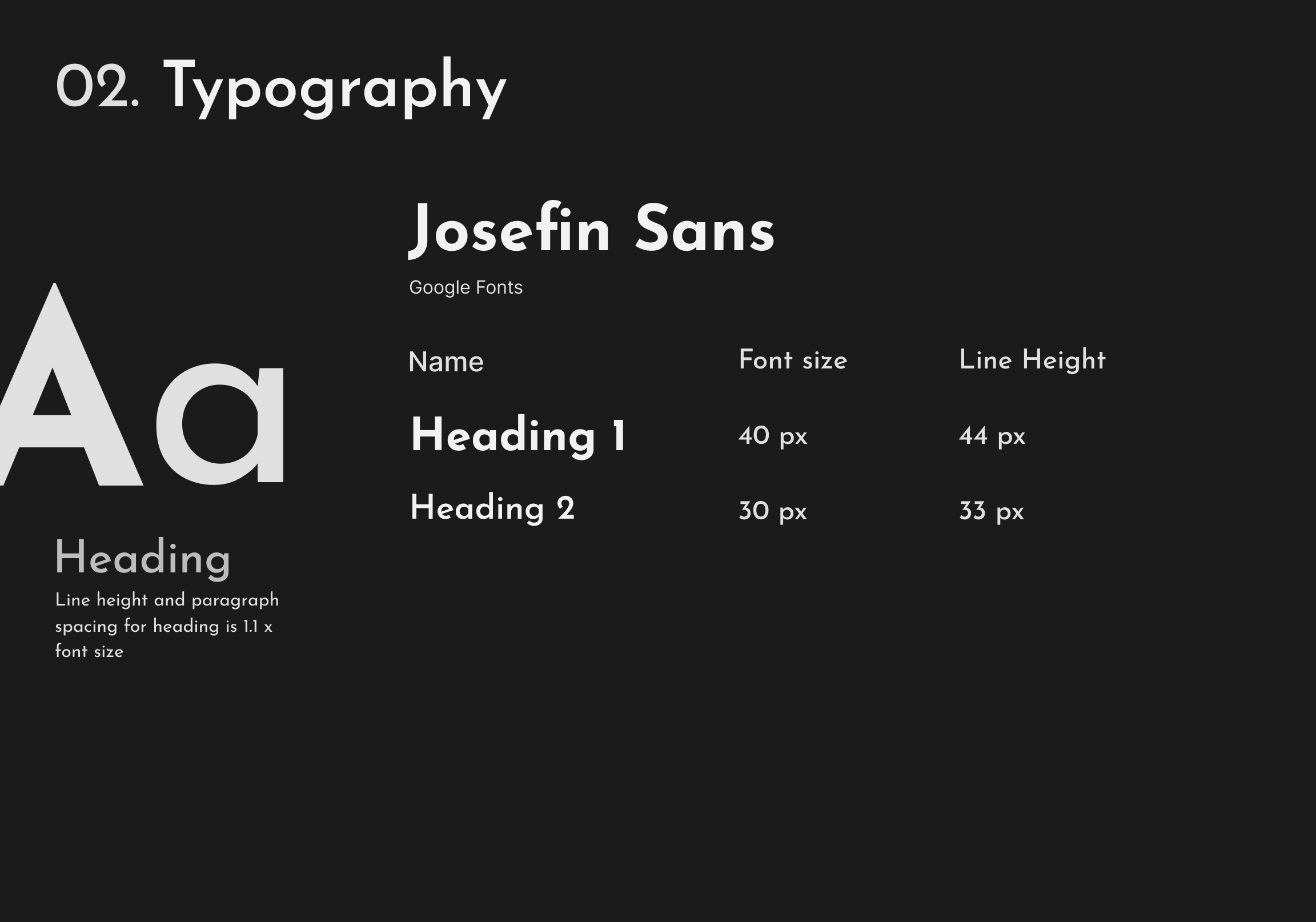
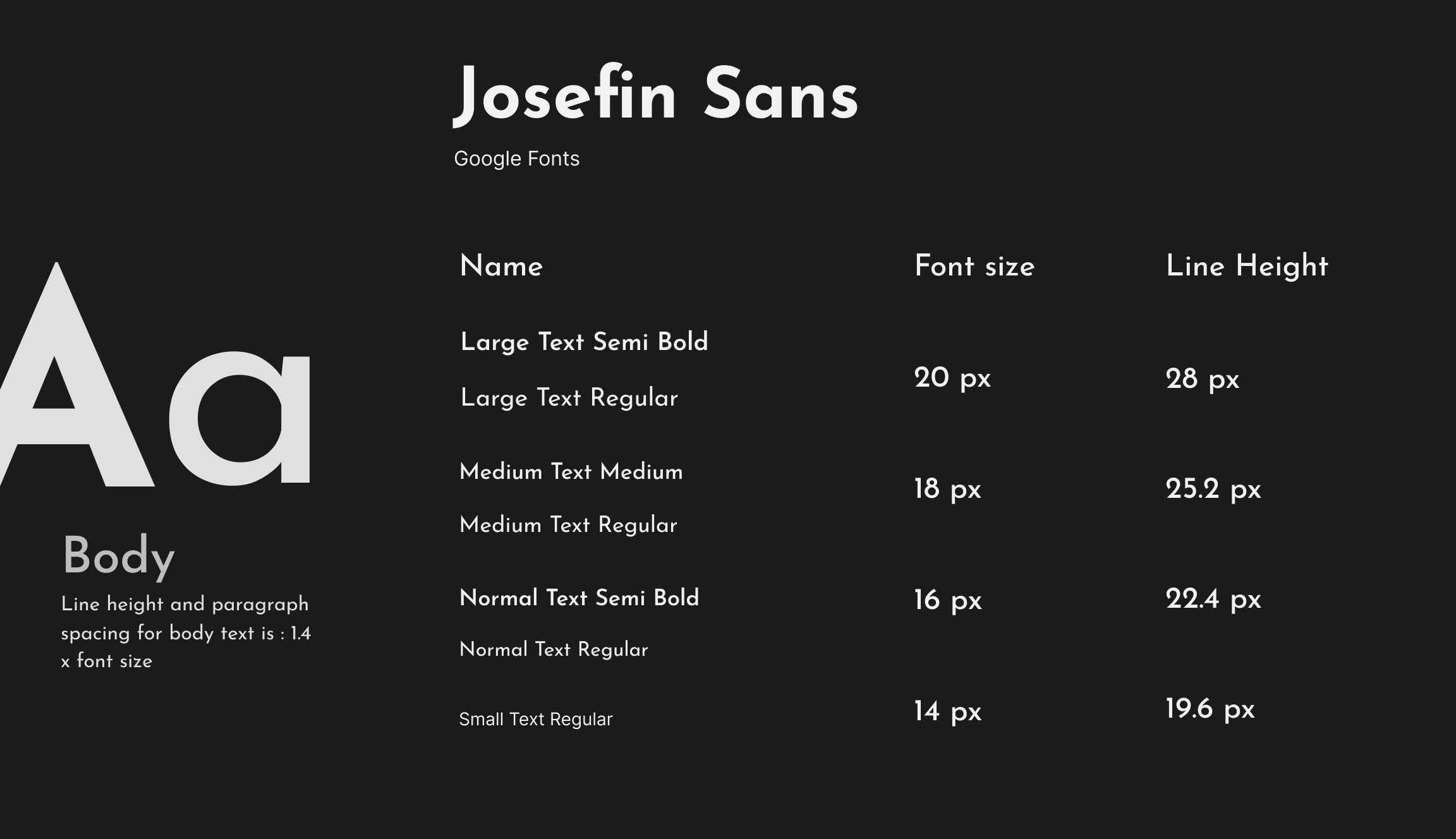
Finalized concept, with mobile view and tablet. Cassettes value, tonality and identity shines through our design.
Results & Impacts
We noticed that developing our advanced search page, was one of our hardest challenges. The filter function had problems from the start, our initial design were had budget, quality, country, genre and year of production. Users thought of it was more complicated and harder to navigate through. We adapted and focused on generic filter types like: Genre and country. And then giving users the option to sort A-Z, most viewed, year and recently added.
From our user tests we discovered that 80% casually navigate and would like to keep doing that, while only 20% would use the search function. Reasons were that users usually don't know what they want to watch, instead they scroll and find different genres that they might have not found if using the search bar.
We strived after a retro look and feel to the website but still showing a fresh and modern brand.
Our onboarding process with payment methods for our subscription service was another task we had to deep diver into. Since we wanted users to feel safe and secure on our website. Key results from our onboarding sessions were that Swish and Klarna made users more comfortable and secure in their payment process.
Key feedback from users: Clean and professional website, easy to understand and navigate through. Reliable and secure, does not look like virus or phishing.
Major Learnings
Cross-functional team
Our team had a good relationship throughout the whole course, we developed a good team culture and structure, structure that became better when assigning roles and sharing work tasks.
We often ended up in discussions, arguing about how we interpreted our usability tests and product analysis. But we managed to solve it with voting and then A/B testing our different solutions.
Exploring our users
In this project we worked outcome-focused , always going back to our OKR, making sure we always worked and delivered value for our users. Working with OKRs developed my knowledge in working with business goals aswell as the users.
Using Jira
Choosing Jira as our issue tracker helped us structure tasks and targeting our sprint deadlines easier. It also allowed us to communicate to-dos for our development team.
My key takes
Having knowledge using OKR and working with an agile work ethic, will bring my next project into a deeper undertanding when targeting business goals.
Cassette in the future
Cassette will be working towards being the leading retro movie streaming site, expanding over Europe first.
Done different
Important to not asume users needs and pain points. Validate and verify with tests. Assigning a scrum master/ product owner from the begining, ensuring the team makes decisions and move on in the process. You can always go back and iterate. Never underestimate issues, try to split an issue into small tickets. Makes it easier to work through. Working with responsiveness from start, building a foundation.
Lessons Learned & Going Forward
Working parallel with developers was fun but sometimes difficult, the Scrum master had to make sure everyone took part in our daily meeting. So that nothing was unclear.
I think that defining and ideating using the lean-startup method was fun, it's a fast paced way of working, and using a structured issue and project tracker like Jira made it easier to communicate with the team and developers.
Cassette has sparked interest for movie enthusiasts and casual streamers. Going forward, Cassette aims to scale-up its business, receiving more licenses to broaden its movie collection.