
UX
Project Details
Summary
I wanted to look into the user experience for people in need of urgent emergency help at home, while focusing on the inclusive aspect. Fastjour is aiming to be Swedens most used service advice application at home. Working together with housing companies in Sweden to help people in need. Fastjour helps users solve problems at home and educates users for future incidents.
Listening to users helped me realize that these are problems that really make peoples daily life troublesome. I started looking into the users emotions and pain points. Helping me acknowledge how to educate and help people the best.
Worst problem had to be that 7/10 users had problems explaining the situation in Swedish or English, resulting in no help at all, not knowing what to do. My priority was to make the app and website easy to understand and in languages where most difficulties occurred.
Key results from user tests:
• Amount of problems solved by using the app by 80%.
• Reduced stress for workers by shortening the amount of calls coming in, from 6/min to 3/min.
• Reduced costs by 15% for fake emergency calls, during the first week of launch.
Role
Tools
Timeline
Intro
After one year in the emergency service, I started to notice what problems usually were called in, problems the user could solve alone, resulting in an emergency that could be prioritzed somewhere else or reduced costs for false emergencies. The emergency service is for everyone in need of help in their home or at work. No help was to be found, so I created it.
Solving this problem is no easy task, users need to be informed about the situation or educated to handle problems on their own, to reduce damage being done to the building and solving the problem.
FastJour is developed to inform, help and ease the daily life for people in need of emergency service.
Goals with the project are:
• User satisfaction from minority groups raised by 80%.
• Compile a common platform for error reporting and emergency cases.
• Create simple and easy instructions on how to solve problems at home.
The Team
As the product owner, I played a part in the whole process, conducting surveys and interviews for research, copywrite, ideation, prototype and testing. User needs were taken in consideration for every decision I had to make.
The Challenge
Make users feel included and understood, 7/10 users did not recieve help after calling for help. Users felt frustrated and helpless. My priority when working on the UX part was to first include different languages so that users understand the service.
Most challenging task was compiling all the information gathered from the interviews and surveys. The pain-points I found from the users are shown below.
There is about 574 housing companies just in Stockholm, so I prioritized on developing a functioning application for residents in Stockholm.
OP stands for Operator (Person working at the call center)

Breaking Down The Process
Understanding The User
The verification and feedback I got from the users was that all the participants wanted instructions and help in their language, since they had trouble explaining the situation in Swedish or English. An onboarding process that is easy to understand and gets the user to the solution on the go.
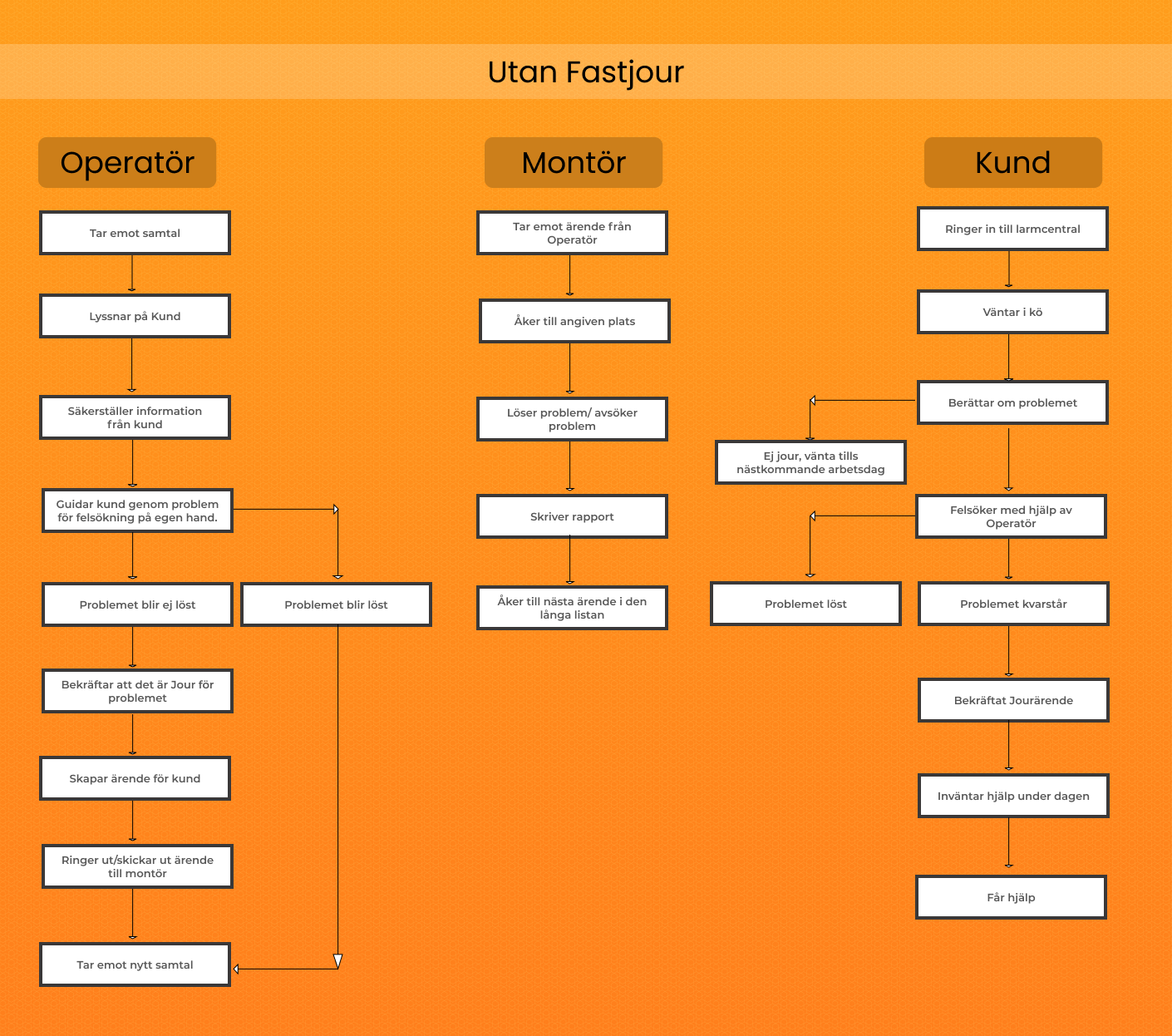
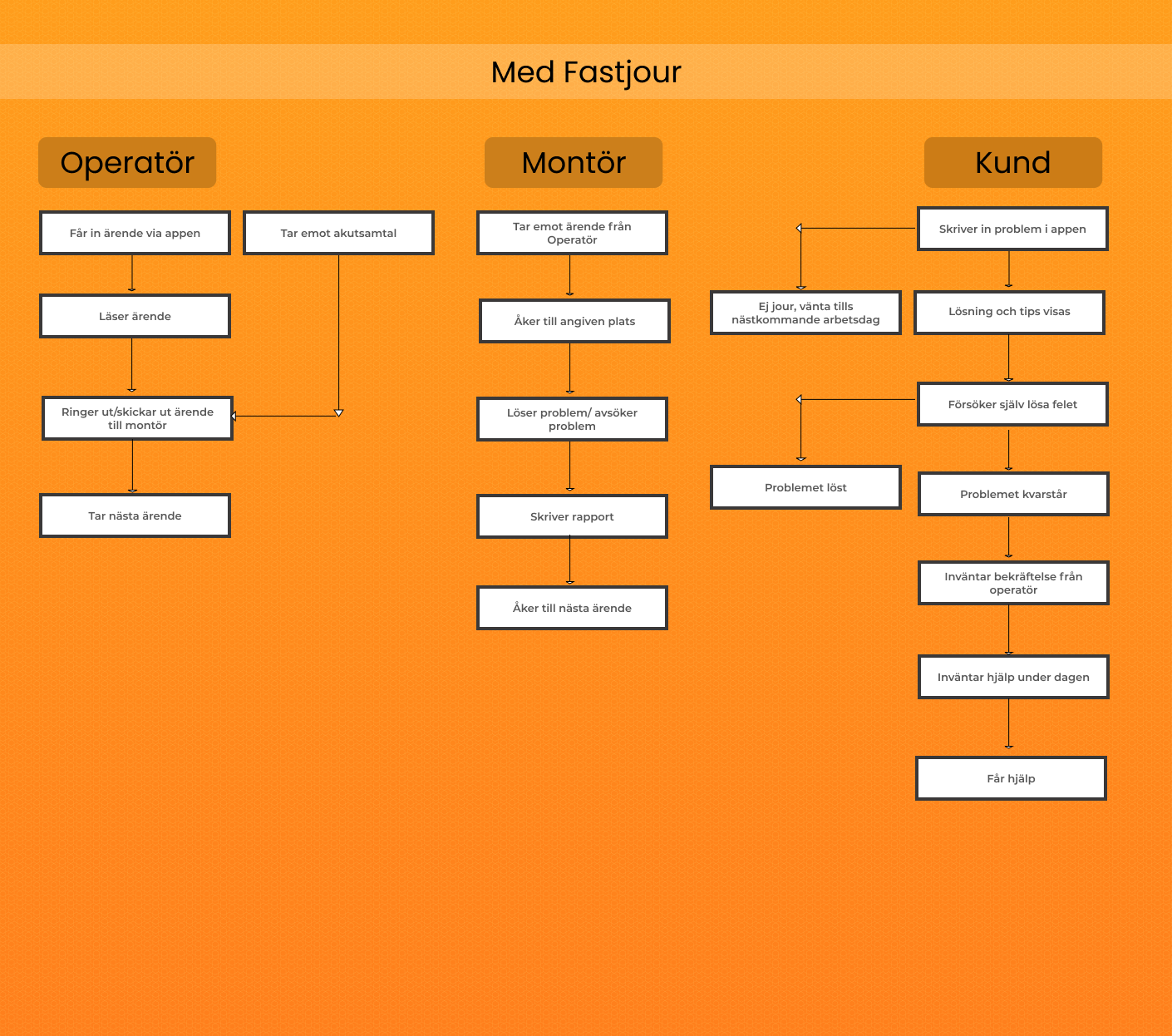
From the verification I went with designing Swim lanes to represent the process users go through when in need of help. It shows a shorter work flow for both the Operator and the user.
Synthesizing The Material
Problem Statements
The biggest problem for me to tackle, was to make it easier for everyone to gather the same information in their language, since 7/10 had problems explaining the situation at home, resulting in no help at all.
• Problems occur at home or at work regularly in Sweden
• 2000+ call are being sent in to the call center everyday.
• Average time spent in line waiting for help, 10 minutes.
• 8/10 calls are not an emergency, taking up time for those in need.
• Outdated contact information. Resulting in no help at all.
• Users feel frustrated when not getting help, feeling helpless and panicking.
After pointing out the problems I go further into ideation, brainstorming to find solutions to the users problems.

Ideating Solutions
The empathy map shows everything the user says, feels, thinks and does. I synthesized the material from the map and went onto the ideation phase. Creating the "how might we?" question to form my solution thinking.
When Ideating solutions, I started with a "How might we?" brainstorm. The brainstorming resulted in a mind map showing the solutions for functions and design. It helped me through the wireframing process, sketching out how the application and website would look like.


Validating Design Concepts

Low-Fi Prototypes

Testing Low-Fi Prototypes with users
Users got the task to choose language, housing company and then when reaching the front page. A new task. The user were told that no water was comming out from the kitchen faucet, navigate to see if there are any nearby incidents causing the problem. The user then gave feedback on how they felt using the app, and if they got the answer to why not water was running in their home.
Some users did not see the (Aktuellt) button in the navbar, resulting in it taking some time for the user to find the list of incidents.
Hi-Fi Prototype Development
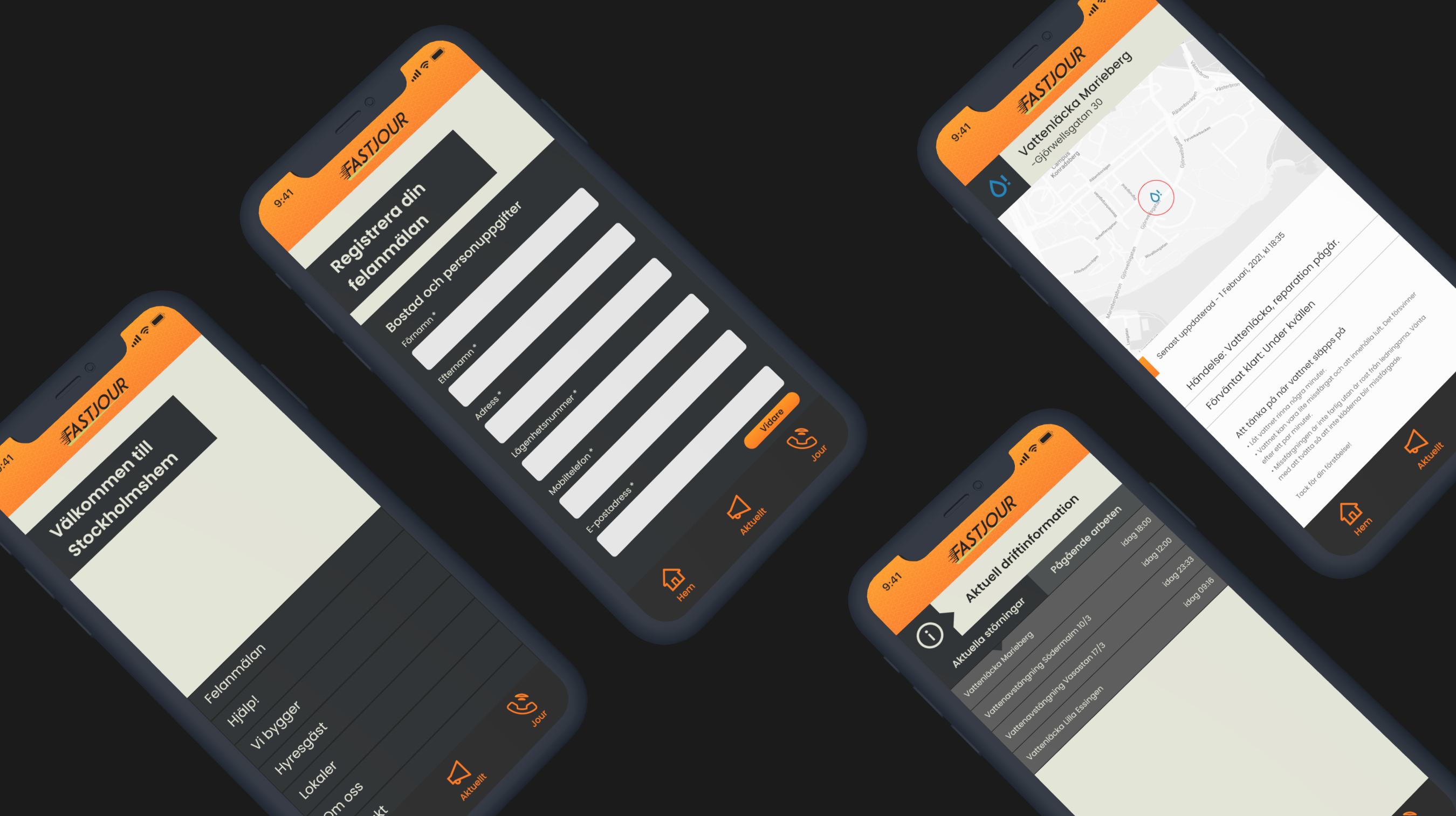
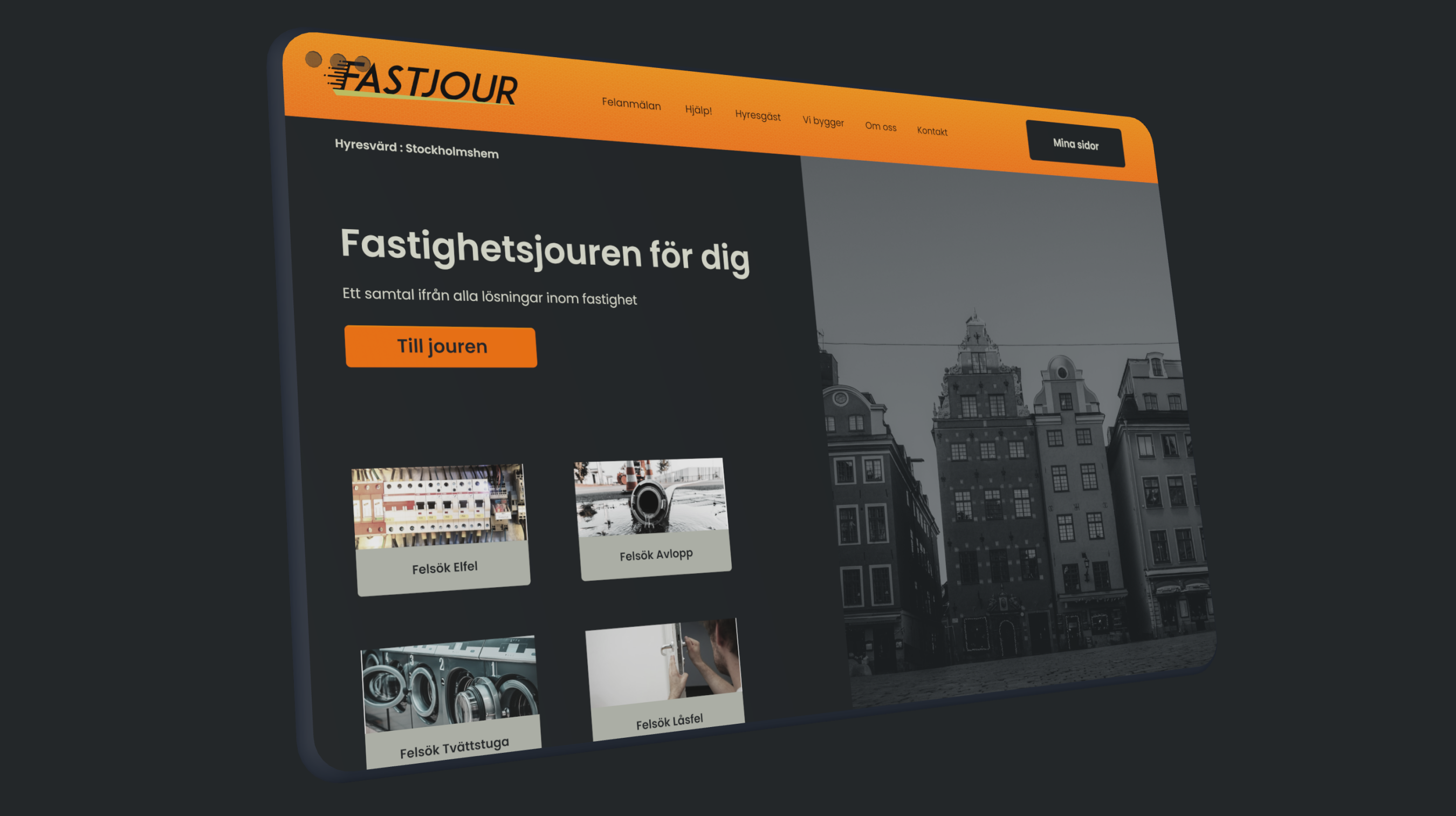
Reaching the Hi-fi prototype stage, applying the design and branding. Now users test and feel the app with visual minds and eyes. Gathering feedback on clarity and feelings.
I wanted to see if any problems persisted throughout the flow or if the same problems occurred from the last test with low-fi.
My goals were reached with 7/10 being able to find the solution or create an errand within 1 minute of starting the app.

Results & Impacts
Loved it! After reading about different solutions, I feel more secure in handling problems at home.
My conclusion ending this project is that my goals were reached, increasing user satisfication from minority groups and helping users educate themselves at home.
Final iteration were making clarity on where the user was in the navigation and sorting the most common problems at the top. Making it easier for users to find their problem quicker.
Major Learnings
Soloplay
I had to learn to manage my own time in how I would schedule and prioritize my work flow.
It was harder to discuss findings and solutions when working alone, but I felt secure in how I handled the project from start to finish.
Research Skills
During the project period, I grew into working in a more fast-paced environment, killing darlings quicker than before.
Project took a bit longer to synthesize but in the end, It all worked out.
Project Management
I knew from the get-go that I had to quickly be agile and change the way of working if something did not work out as intended. If I chose the wrong method or if any test days got canceled, I quickly changed my approach and made the best from the situation. This helped me to rearrange certain goals during sprints.
Next for me to learn
This project helped me immensly with how I arrange my work and be quick to changes. Working solo can have drawbacks, e.g. biased in decisions.
Ethic and inclusion is something that I strive to design and develop within every project, so up next. I will try to apply more guidelines in how I make decisions based on ethics and inclusion.
The future for Fastjour
I will work on Fastjour during my spare time, my vision is that Fastjour will be the leading service provided to the people of Sweden. Within the next month I will participate and compete with Fastjour, pitching my idea at Venture Cup 2021.
Done Different
I could've planned more tests during each iteration to gather more feedback and really tune the flow, making it the best possible MVP. More research could've been done during the early stages, but I had a difficult time getting contact with housing companies and some minority groups.
Lessons Learned & Going Forward
Difficult working alone, but I gained benefits in taking my time and really learn to develop from scratch and working with an agile mindset.
Looking forward to see Fastjour grow during the upcoming years.